High-frequency technology forms the backbone of modern communications networks. From mobile phone base stations and Wi-Fi infrastructures to RF measurement technology — the right antennas, cables and RF components play a decisive role in determining system performance. Attenuation values, frequency ranges and impedance matching must be precisely tailored to the specific application.
An overview of product groups
- Antennas: Indoor antennas for Wi-Fi and in-building radio systems (2.4/5 GHz), outdoor antennas with enhanced protection ratings for mobile phone base stations. Omnidirectional, directional and sector antennas for different coverage patterns.
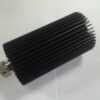
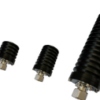
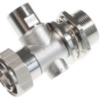
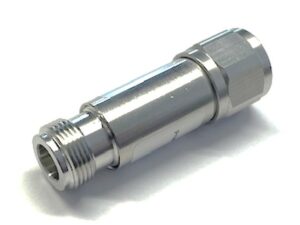
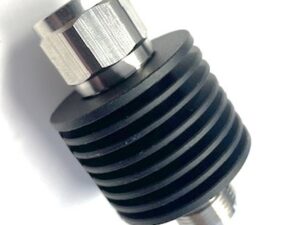
- HF components: Attenuators for level adjustment (3/6/10/20 dB), directional couplers for signal extraction, filters for frequency selection. Impedances of 50/75 ohms depending on the application.
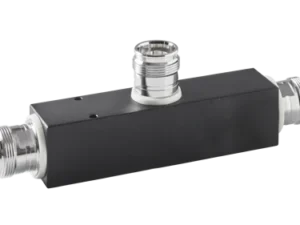
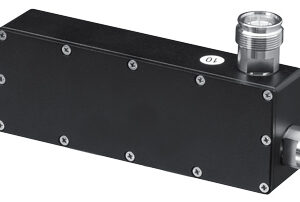
- Tapper/Splitter/Coupler: Power dividers and signal splitters for multipath systems. Asymmetrical tappers for unequal distribution, symmetrical splitters for equal distribution.
- Coaxial cable: RG types in accordance with MIL-C-17 (RG58, RG213, RG214), low-loss cables for long distances. Halogen-free versions in accordance with IEC 60754 for building installations.
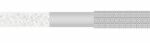
- Radiaflex leak detection cable: Radiating coaxial cable for tunnel radio systems and elongated buildings. Defined radiation pattern along the entire length of the cable.
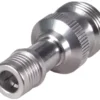
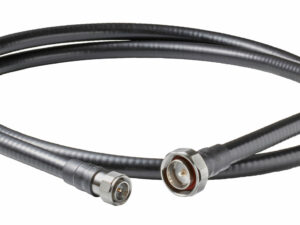
- Jumper cables: Pre-assembled RF connection cables with N, SMA and BNC connectors. Phase-stable for critical applications.
Areas of application
Mobile communications infrastructure
Base stations and transmitting stations for GSM (900/1800 MHz), UMTS (2100 MHz), LTE (800/1800/2600 MHz) and 5G (3500 MHz) require precisely tuned RF components. High-gain antennas, low-loss cables and filters for channel separation are key components. AISG-compliant components enable the remote control of antenna parameters.
Wi-Fi distribution systems
Comprehensive Wi-Fi coverage in industrial halls, logistics centres or public buildings relies on well-thought-out RF planning. Sector antennas ensure targeted coverage, whilst splitters distribute the signal across several access points. Calculating the attenuation of the cable runs is essential for stable connections.
Building radio systems and tunnel systems
BOS radio, private radio networks or public safety networks in buildings often use leaky cable systems. The radiating coaxial cable provides uniform RF signal coverage throughout long tunnels or complex, winding building complexes. Supplemented by repeaters and bidirectional amplifiers, this creates seamless radio coverage.
RF Measurement Technology and Laboratory
Precision measurements require calibrated RF components. Attenuators with precisely defined values, phase-stable cables and high-quality terminating resistors are standard equipment in any RF laboratory. Directional couplers enable the measurement of forward and reverse power without interrupting the signal path.
Designs and standards
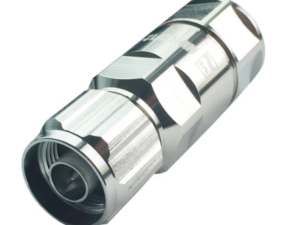
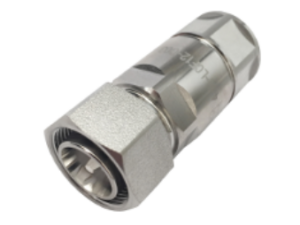
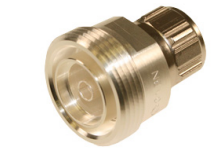
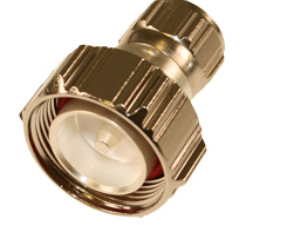
Standardisation in accordance with IEC 61169 and EN 50083 ensures compatibility between manufacturers. N connectors dominate the mobile communications sector thanks to their performance up to 11 GHz. SMA connectors are found in compact devices and test set-ups up to 18 GHz. F connectors in accordance with DIN EN 60169-24 remain the standard in satellite technology.
Cable specifications comply with MIL-C-17 for RG types or manufacturer-specific standards for low-loss variants. Shielding attenuation is measured in accordance with IEC 62153-4 — values above 90 dB are essential for interference-free operation. Fire safety requirements in accordance with EN 50575 determine the choice of cable for use in buildings.
VSWR (Voltage Standing Wave Ratio), as a key parameter, describes the quality of the match. Values below 1.5:1 are considered good; professional systems aim for below 1.2:1. Intermodulation in active components must meet the system requirements — typically -150 dBc for modern mobile networks.
B2B purchasing at E.Hartner
Attractive tiered pricing from our Vienna warehouse for projects of all sizes. Technical advice on the optimal selection of components and system design available on request. Express delivery available for urgent network upgrades or repairs.